Owleys Tailgate Car Dog Ramp: Safer SUV & Truck Access
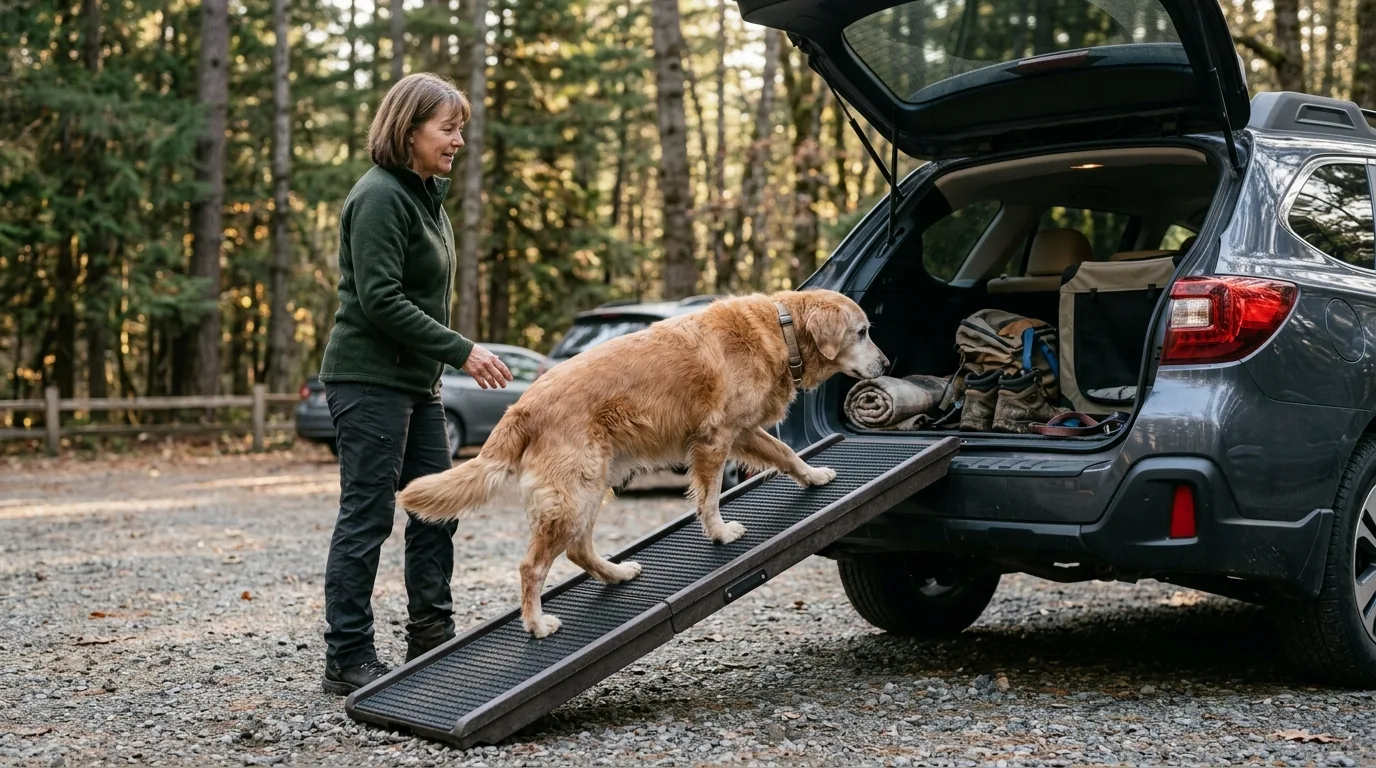
Car Dog Ramp “Tailgate” by Owleys: Easier, Safer Car Access for Dogs
Helping a dog get in and out of a vehicle shouldn’t require risky jumps or awkward lifting. A well-designed ramp can reduce strain on joints, improve confidence for hesitant dogs, and make everyday errands or road trips smoother—especially for seniors, short-legged breeds, post-injury recovery, and larger dogs that are hard to carry.
Why a car ramp can be a better option than jumping
Many dogs hop into the car without a second thought—until they can’t. Repeated impact from jumping down off an SUV cargo floor or truck tailgate can add stress to wrists, shoulders, hips, and the spine over time. A ramp creates a more controlled transition, which can be kinder to the body and easier to repeat multiple times in a day.
- Reduces repetitive impact on wrists, shoulders, hips, and spine compared with jumping down from a tailgate or SUV cargo floor
- Supports aging dogs, dogs with arthritis or mobility limitations, and dogs recovering from surgery (follow veterinarian guidance for post-op mobility)
- Helps prevent handler strain from lifting heavier dogs into vehicles
- Encourages consistent loading behavior for anxious or cautious dogs by providing a predictable path
What makes the Owleys “Tailgate” ramp practical for daily use
A ramp only helps if it actually gets used. For daily errands, quick stops, and weekend adventures, portability and simple setup matter as much as the ramp surface itself. The Car Dog Ramp “Tailgate” by Owleys is designed as a bring-along ramp that can be deployed when your dog needs it—then stored again when you’re back on the road.
- Designed for vehicle entry and exit via tailgate, trunk, or rear hatch setups
- Portable approach: intended to be brought along and deployed when needed rather than permanently installed
- A ramp is often easier for many dogs to understand than being lifted, particularly if paired with treats and a calm training routine
- Works well for routine scenarios: vet visits, grooming appointments, hikes, beach days, and errands where repeated loading happens
For dogs that hesitate at the lip of a trunk or cargo floor, a ramp can function like a “bridge” that removes the mental hurdle of a leap. That steady, repeatable path often lowers stress during travel days—especially when paired with a consistent loading cue.
At-a-glance considerations before buying
Ramps aren’t one-size-fits-all. Before choosing a car dog ramp, it helps to do a quick measurement and think through where you park, how often you’ll set up, and what your dog finds comfortable.
- Vehicle height: higher cargo floors generally need longer ramps to keep the angle comfortable
- Dog size and strength: confirm weight capacity and stability needs for larger breeds
- Traction: look for a surface that helps paws grip in wet weather, sand, or snow
- Storage space: measure trunk/cargo area so the ramp fits alongside crates or luggage
- Handling: consider how quickly the ramp can be set up and put away during short stops
Quick checklist for choosing a car dog ramp
| Factor | What to measure or check | Why it matters |
|---|---|---|
| Ramp length | Height from ground to cargo floor/tailgate | A gentler angle is easier on joints and boosts confidence |
| Surface traction | Texture, grip, and performance when wet | Helps prevent slips and hesitation on the ramp |
| Stability | Wobble, flex, and footing on uneven ground | Keeps the dog feeling secure during ascent/descent |
| Portability | Fold/carry convenience and ramp weight | Makes it more likely the ramp is used consistently |
| Storage fit | Folded dimensions vs. trunk space | Avoids last-minute unloading to make room |
How to introduce a ramp so the dog actually uses it
The best ramp in the world won’t help if it becomes “the scary board.” Keep training calm, predictable, and reward-based—especially for cautious dogs or dogs with a history of slipping.
Safety tips for tailgate and SUV loading
For general pet travel safety and preparation tips, helpful references include the American Kennel Club (AKC) travel safety guidance and the American Veterinary Medical Association (AVMA) pet travel recommendations.
Pairing the ramp with other car-travel essentials
For frequent riders, the Front & Back Seat Car Seat Covers Set can help protect upholstery and simplify cleanup after rainy walks, trail days, or beach trips—especially when loading happens multiple times.
Product spotlight
Before ordering, measure your vehicle’s ground-to-cargo height and confirm you have enough trunk or cargo space to store the ramp when folded. You can find the product here: Car Dog Ramp “Tailgate” by Owleys.
FAQ
Is a ramp better than stairs for dogs getting into a car?
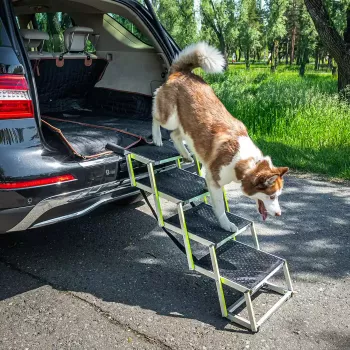
A ramp can be easier on joints because it provides a continuous surface with fewer “step up/step down” moments, and many dogs feel steadier walking than climbing. Some dogs prefer stairs for a shorter footprint in tight spaces, so the best choice depends on your dog’s comfort, confidence, and how much storage room you have.
How long should a car dog ramp be for an SUV or truck tailgate?
Longer ramps usually create a gentler incline, which can feel safer and reduce strain. Measure from the ground to your cargo floor or tailgate and choose a length that keeps the angle comfortable—higher vehicles typically need longer ramps than sedans.
How do you train a dog to use a car ramp without fear?
Start with the ramp flat on the ground and reward any interaction, then gradually add height (curb, step, then vehicle) using short, upbeat sessions. Keep the ramp stable and the surface dry, practice both going up and down, and never force a worried dog—if pain or limping appears, check with a veterinarian.









Leave a comment