Automatic Pet Water Fountain Guide: 2.8L Pick
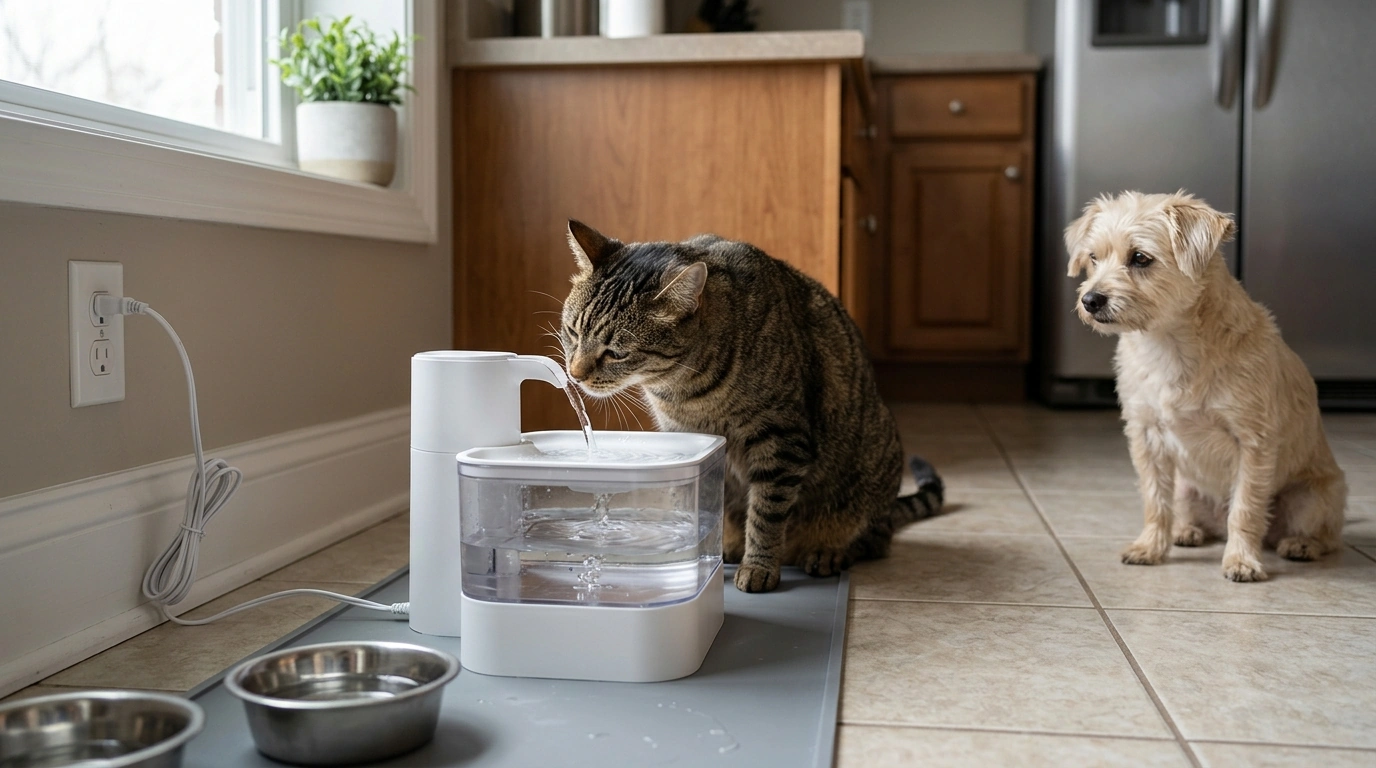
Flowing water can encourage pets to drink more while helping keep a bowl from going stale. A well-chosen fountain balances capacity, filtration, quiet operation, and easy cleaning so daily hydration is simple to maintain—especially for cats, picky drinkers, and busy multi-pet homes.
Why a fountain can improve daily hydration
Many pets show more interest in moving water than a still bowl. A gentle stream or bubbling surface can feel fresher, sound more enticing, and keep curious cats (and some dogs) coming back for frequent sips.
- Moving water is often more appealing than still water, especially for picky drinkers.
- Circulation can cut down “stale bowl” odor and reduce surface debris between cleanings.
- A larger reservoir can mean fewer refills than a standard dish.
- Hydration support matters for cats and for households where multiple pets share one station.
For general pet-care guidance and health resources, you can also review trusted veterinary references like the American Veterinary Medical Association (AVMA) — Caring for Pets and the Cornell University College of Veterinary Medicine feline health topics.
What to look for in an automatic pet water fountain
Not all fountains are equally easy to live with. Focusing on a few practical details can help you avoid annoying noise, constant refills, and hard-to-clean parts.
- Capacity: Match tank size to your household (one cat vs. multiple pets) and how often refilling is realistic.
- Filtration: Multi-stage filters (often activated carbon plus a pre-filter screen) can help reduce odors and visible particles.
- Pump noise and vibration: A quieter pump is easier on skittish pets and works better near living or sleeping areas.
- Materials: Food-grade plastic, stainless steel, and ceramic are common; smoother surfaces typically scrub cleaner.
- Ease of cleaning: Tool-free disassembly and fewer crevices make weekly cleaning far more doable.
- Water-level visibility and low-water protection: Helpful for preventing the pump from running dry and wearing out early.
- Power and cord safety: Stable placement, tidy cable routing, and a protected outlet matter around spills.
How the circulation and filter system typically works
Most automatic fountains share the same basic flow path, even if the spout style looks different.
- A small pump draws water from the reservoir and pushes it through a spout or stream to create motion.
- Water commonly passes through a filter cartridge to help reduce odor-causing compounds and trap small particles.
- Pre-filters or pump screens catch hair and larger debris to protect the pump and keep flow steady.
- Consistent performance depends on correct water level, a clean intake, and timely filter changes.
If your water is very hard, mineral buildup can shorten the time between cleanings. In those cases, using filtered tap water and wiping down parts more often can make a noticeable difference in clarity and pump noise.
Featured pick: 2.8L Automatic Pet Water Fountain
A larger-capacity fountain can simplify routines while still delivering that fresh, moving-water appeal. The 2.8L Automatic Pet Water Fountain is a practical choice when you want fewer refills without sacrificing daily freshness.
- 2.8L capacity supports fewer refills for many households compared with a standard bowl.
- Designed for steady flow that can encourage more regular drinking.
- Best fit for: cat households, small-to-medium dogs, and multi-pet homes that benefit from a larger reservoir.
- Placement tip: Set it in a quiet corner away from litter boxes and food bowls, with a mat underneath to catch drips.
| Detail | Value |
|---|---|
| Product | 2.8L Automatic Pet Water Fountain |
| Capacity | 2.8L |
| Price | 47.01 USD |
| Availability | In stock |
Helpful add-ons for a cleaner pet routine
Hydration is only part of a pet-friendly setup. These in-stock picks can support cleaner travel days and a more polished, pet-ready home.
- Front & Back Seat Car Seat Covers Set: helps protect seats from fur, muddy paws, and everyday pet mess during vet visits or road trips.
- Contemporary Metal Ginkgo Leaf Wall Decor: an easy way to refresh a living space while keeping surfaces uncluttered around pet stations.
Setup tips that help pets transition quickly
A smooth first week can determine whether your pet adopts the fountain confidently or avoids it. Keep changes gentle and predictable.
Cleaning and filter-change routine
| Task | Typical frequency | Notes |
|---|---|---|
| Rinse and refill | Daily to every few days | Top up to maintain steady flow and protect the pump |
| Wash reservoir and spout | Weekly | Focus on slick biofilm areas and crevices |
| Clean pump and intake screen | Every 1–2 weeks | More often if pets shed heavily |
| Replace filter cartridge | Every 2–4 weeks | Adjust based on water quality and number of pets |
| Deep clean and inspect parts | Monthly | Check seals, cords, and any wear |
Common issues and quick fixes
For broader pet health information (including hydration-related concerns), the VCA Animal Hospitals pet health library is another helpful reference to discuss with your veterinarian.
FAQ
How often should an automatic pet water fountain be cleaned?
A weekly wash for the reservoir and spout is a solid baseline. If your pet sheds heavily or you have multiple pets using the same fountain, clean the pump and intake screen more often to prevent clogs and odor.
Do pet water fountains need filters to be safe to use?
Some fountains can run without a filter, but filters usually help reduce odors and capture particles that would otherwise circulate. Follow the manufacturer’s guidance and keep up with regular cleaning either way.
Why is the fountain making noise after refilling?
Noise after refilling is commonly caused by low water level, trapped air in the pump, or debris around the impeller. Top off to the recommended level, gently reseat the pump, and clean the intake screen to restore quiet operation.










Leave a comment